




 This famous ancient oak tree (former pollard) is named the ‘Minchenden Oak’ formally named the ‘Chandos Oak’ and features in Jacob Strutt’s ‘Sylva Britannica’ (1821).
Once said to have the largest canopy spread of any tree in England (and why it features in Sylva Britannica) it has unfortunately suffered some poor tree pruning practice in the past and while still a spectacular and historic tree, is no longer the specimen it must have been.
The tree stands in the LB Enfield owned ‘Minchenden Oak Garden’ a small pocket garden in Waterfall Road, N14 7JN.
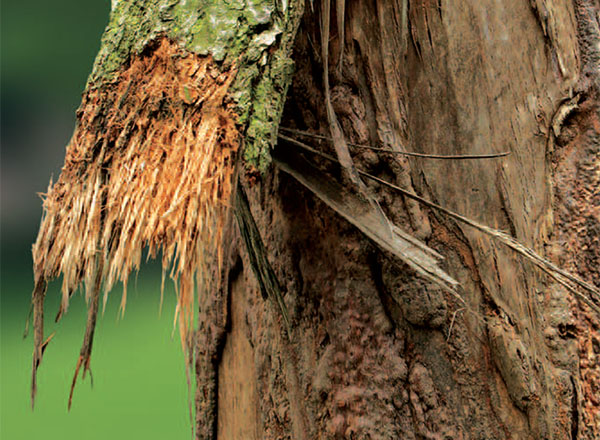
A recent inspection of the Minchenden Oak identified a structural related concern in the form of cracking found on the south side of the stem. Monitoring over a 4 month period showed that the movement was continual and appeared consistent with a rotational movement of the stem which was suspected to be a symptom of structural subsidence. In addition to this many fungal fruiting bodies were identified along with decay points in the upper crown that were considered to reflect an overall decline of this very important tree.
Visual decline is not evidence enough alone to warrant any remedial action on such an important tree, so we thought it prudent to have a condition and internal decay test undertaken in the form of a PiCUS test with reported findings.
The extent of decay revealed by this test supported our concerns and further identified that this decay had reached a critical stage where by remedial measures were not only warranted but necessary to mitigate the potential for overall structural failure; an unacceptable risk given that this is an extremely important tree.
We have looked for an option that retains as much of the Minchenden Oak as possible whilst reducing the possibility of overall structural failure, a recommendation to remove as much of the upper frameworks as deemed necessary for structural stability has been decided. This would hopefully promote the lower growth and allow the retention of the tree all be it to a lesser extent than its current form.
This works is planned to be taken forward on the 12th of November 2013 and will involve the use of a crane from an access point outside the park itself. The crane is necessary in order to remove the upper framework without damaging any of the lower structure giving the tree the greatest chance of survival during this process.












